I am so pleased to announce the publication today of Vol. 1 No. 1 (2026): The Inaugural Issue of Ethiopian Theological Journal from the Mekane Yesus Seminary in Addis Ababa.
Over the last several months, I have been working with a team of seminary faculty to make their first theological journal a reality. The team is headed by Rev. Dr. Tibebu Teklu. The other editors-in-chief are Rev. Dr. Misgana Mathewos (president of the seminary) and Rev. Dr. Yacob Godebo. The fruits of their endeavor are below. May this project foster the theological influence of the seminary and the Ethiopian Evangelical Church Mekane Yesus is Ethiopia, in Africa, and across the world.
The conclusion of ASOR25# was a gala to mark the 125th anniversary of the society. Good food, interesting speakers, and guest musicians made for a festive evening. And leaders announced that we exceeded the $5,000,000 fund drive by a million dollars.
After a very short night, we headed back to St. Paul.
Recurring note — most tech endeavors are by individual scholars building projects the technology for which then fades and is replaced by new approach’s and a new group of your scholars working on their own with limited resources.
Archaeology of Lebanon
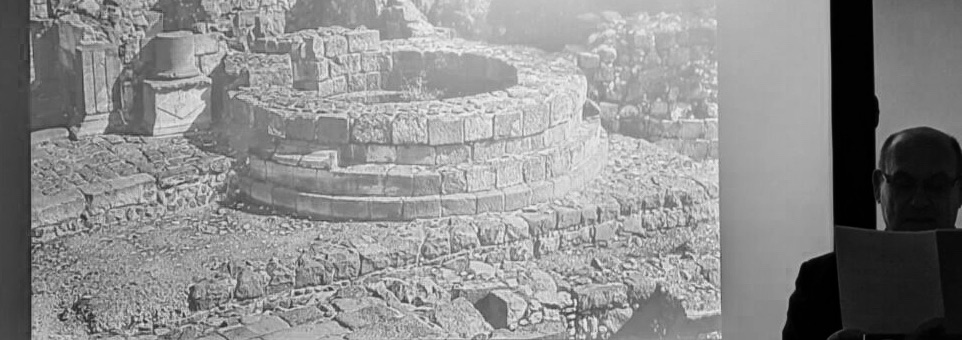
Review of archaeological work on the island of Tyre. Reviewing evidence of Bronze Age settlements. But no trace of its legendary wealth and prominence. Funerary practices revealed in a cemetery. Surveys n the mainland show more consistent occupation in the Bronze Age.
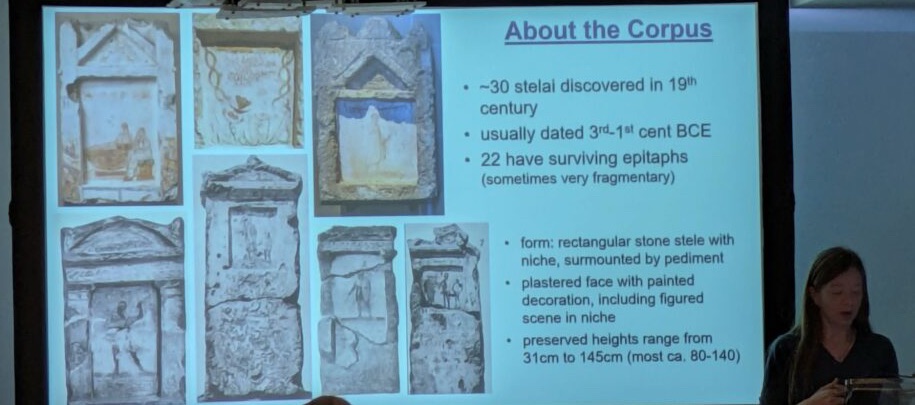
Painted funerary stelae
A study of 30 stelae discovered in the 19th century and scattered in various museums.
Many are stelae of soldiers
Holding s shield
Sometimes sponsored by comrades (action pose)
Sometimes with family members
Women in corpus
on couches perhaps indicating death in childbirth.
Standing woman with two toddlers at her feet — atypical… more like temple boy (Priestess with temple guardians?)
Some without figures (butterflies)
Males who are not soldiers
Birds present
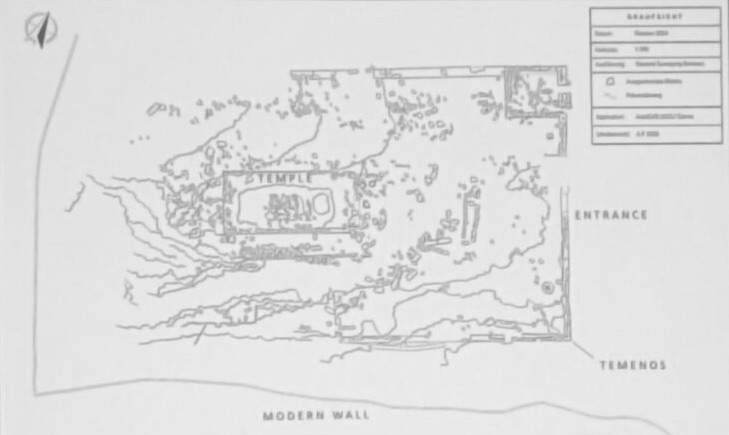
Some 50 documented Roman temples in Lebanon. Paper focussed on the Helios sanctuary of Qasr Naous,
Western temple is in poor shape although its compound is clear along with part of the podium. Presenter assumed the temple is tetra style. Some shafts were one piece. Other featured documented: Corinthian capitals, Bases, Consoles, Diagonal friezes, Typanon, and Angularium (only one in Lebanon)
Dated to 1st half of first century bc to 2nd AD.
Classical Archaeology
Greek drinking vessels were the primary finds among the Greek sherds. There were not sufficient other sherds to support a full Greek life. Same in other sites in the near Levant with Greek sherds.
A second paper was on Iconium, where work has recently begun. It is a large pre Roman site. Various pottery types and including a ceramic bath tube. South central Anatolian had significant Hellenistic influences and connections to the Greek coast.
South Gate at Tiberias
The presenter suggested that Hadrian, after traveling to Gerasa, crossed the Jordan to the Roman camp near Bet Shean, and then made a trip to Tiberias (South Gate built in his honor), el Araj, Sepphoris, and then on to Caesarea Maritima. Some it the audience questioned the dating of certain elements of the hypothesis.
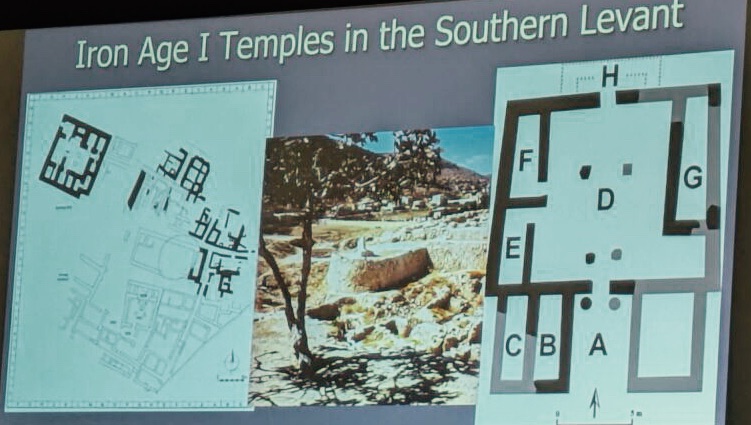
The “mound on the mount” refers to a theory by archaeologists Israel Finkelstein and others that the main ancient settlement of Jerusalem was located on a distinct, five-hectare mound on the Temple Mount itself, not in the City of David ridge. Behind this theory is the size of major Canaanite cities and the placement the temple within the city itself. Canaanite cities are from the late Bronze period. However, Aharon Tavger says we should look to Iron I parallels (Mt. Gerazim and Bethel) where the sacred site is outside and a bit of a distance from thet city itself. The distance between the “city of David” and the location of Solomon’s temple fits this pattern.
Herod’s Harbor
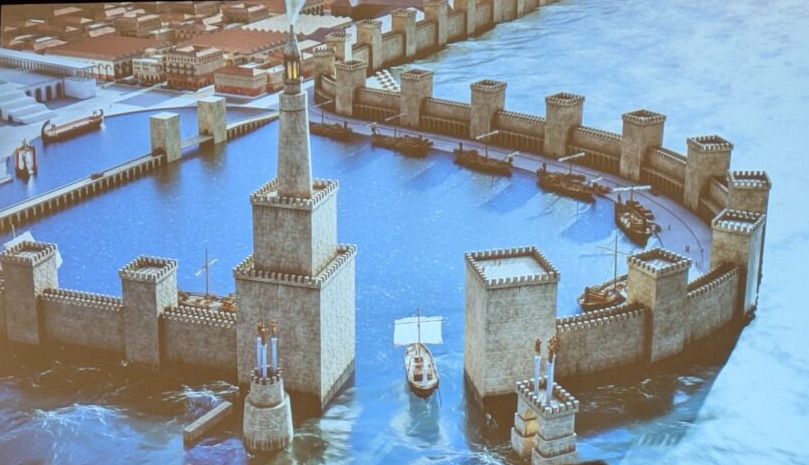
A fresh description of Herod’s harbor at Caesarea includes explanation taking into account the overall morphology of the harbor itself; the form and function of the structure at the south end of the harbor known as Procumatia or breaker of the waves; and, with extreme eddy effect on form and function, the free-standing edifices at the harbor’s entrance to the north. Fascinating with good images.
In the afternoon I took in a workshop titled: What is this? Museum directors presented items in their collections about which there is uncertainty as to the item itself and its authenticity (is it a fake?). Of the nine items presented, the group was able to identify one item and movie significant insight into others…. And the session was fun!
Also attended a session on pseudo-archaeology, its origins and implications. PA continues to be a significant problem.
My name tag
Since I renewed my membership for another year while at the conference, I was “awarded” a ribbon for my name tag. Appropriate? Probably.
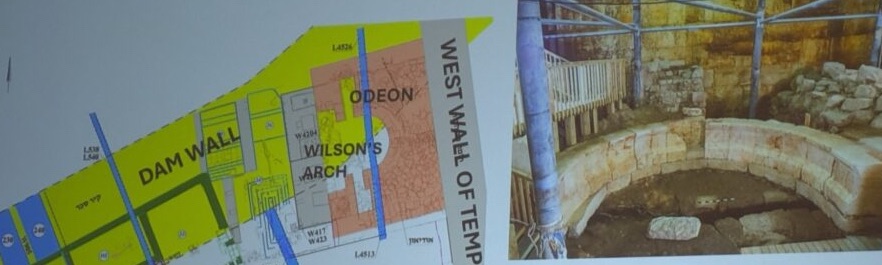
I spent significant time during Day 1 at sessions pertaining to Wilson’s Arch and the Odeon discovered beneath it. These lectures celebrated the publication of a report on recent archaeological work. Hadrian’s plans for Jerusalem led to the abandonment of the structure before it was completed.
A report on excavation under the floors of the church of the Holy Sepulchre added more detail about the quarry outside the city during the late second temple period including terraces for grape vines and fragments of a suburban road. Although the foundation for a wall was revealed from the Hadrianic period, the excavators did not find evidence supporting the hypothesis of a major temple built on the site.
Two papers addressed the upper aqueduct servicing Jerusalem.
I was most intrigued by a paper on “Image of God as an emblem of the neo-Assyrian empire.” While I would disagree with assigning the usage to a priestly source from the time of the Babylonian captivity, the archaeological context for understanding the term might indeed be the steles from the Mesopotamian world that were emblems for a king or god. The usage of “image of God” may not be a compliment, but rather a statement of what humanity is like — tempted to be “like God” and seeking to build a tower up to the heavenly realm. That might explain why the term disappears f rom the biblical texts following the scattering after Babel. I am not sure this works, but it is a matter for more thought and study.
We use cookies to optimize our website and our service.
FunctionalAlways active
The technical storage or access is strictly necessary for the legitimate purpose of enabling the use of a specific service explicitly requested by the subscriber or user, or for the sole purpose of carrying out the transmission of a communication over an electronic communications network.
Preferences
The technical storage or access is necessary for the legitimate purpose of storing preferences that are not requested by the subscriber or user.
Statistics
The technical storage or access that is used exclusively for statistical purposes.The technical storage or access that is used exclusively for anonymous statistical purposes. Without a subpoena, voluntary compliance on the part of your Internet Service Provider, or additional records from a third party, information stored or retrieved for this purpose alone cannot usually be used to identify you.
Marketing
The technical storage or access is required to create user profiles to send advertising, or to track the user on a website or across several websites for similar marketing purposes.